Case Study
Pepper at Nestlé Japan: How One Robot Generated a 15% Sales Lift Across 1,000 Stores
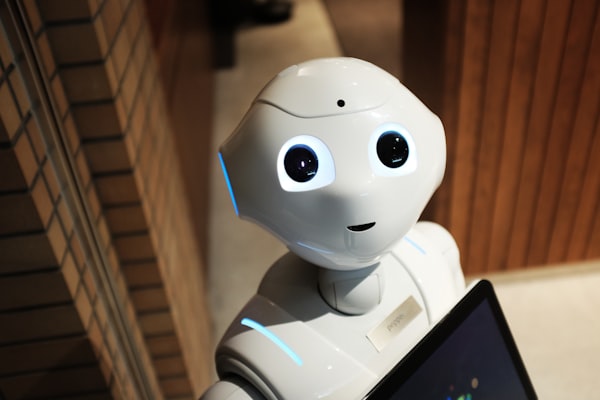
With 27,000+ units deployed globally, SoftBank's Pepper remains the world's most commercially successful social robot. Its flagship deployment at Nestlé Japan tells the story of what retail robots can achieve at scale.
Nestlé Japan deployed Pepper across 1,000+ retail locations to promote Nescafé coffee machines. The results were striking: a consistent 15% increase in sales for the promoted product line.
Beyond direct sales impact, the deployment revealed several secondary benefits:
- Customer dwell time: +3 minutes per interaction, creating longer brand exposure windows
- Brand recall: Significantly improved in post-visit surveys compared to traditional displays
- Data collection: Pepper captured customer preferences and demographics during natural conversations
- Social media buzz: Customers frequently photographed and shared their Pepper interactions online
The deployment proved that social robots create a fundamentally different retail interaction — one that feels personal, memorable, and shareable in ways that digital screens and static displays cannot match.
Source: Robozaps Retail Report 2026
Industry Trends
From Lobby Concierge to Shelf Stocker: How CES 2026 Redefined Hotel and Retail Automation
CES 2026 showcased a new generation of robots with human-like joints capable of navigating hotel lobbies and retail floors without any facility retrofitting.
The key breakthrough on display was adaptability. New robots demonstrated the ability to navigate complex, crowded environments — hotel lobbies during check-in rush, retail aisles during sales events — without requiring any infrastructure modifications.
LG's CLOi robots, already deployed in hotels, airports, and shopping malls across Asia, showcased new capabilities including natural language concierge services powered by large language models.
- Hotel lobbies: Check-in assistance, luggage guidance, restaurant recommendations in multiple languages
- Shopping malls: Store directory navigation, promotion delivery, event announcements
- Airports: Gate navigation, flight status updates, accessibility assistance
The integration of LLMs (GPT-4, Gemini) enables these robots to hold natural customer conversations — a dramatic improvement over the scripted interactions of previous generations.
Source: TRAVHOTECH CES 2026
Business Model
The Robot-as-a-Service Revolution: Why Retailers Are Renting Robots Instead of Buying
Robot-as-a-Service (RaaS) pricing — typically $999–$2,000/month for service robots — is removing the biggest barrier to retail robot adoption: the six-figure upfront capital expenditure.
Manufacturing costs for service robots dropped 40% between 2023–2025, enabling viable subscription pricing that puts robots within reach of mid-market retailers and independent hotels.
The RaaS model typically includes hardware, software updates, maintenance, and analytics dashboard access. Different robot types serve different retail needs:
- Greeters ($999–$1,500/mo): Customer welcome, promotion delivery, wayfinding
- Inventory scanners ($1,200–$1,800/mo): Automated shelf auditing, stock level monitoring
- Food delivery ($800–$1,400/mo): Restaurant table service, room service in hotels
- Shelf stockers ($1,500–$2,000/mo): Product placement, planogram compliance checking
Goldman Sachs projects the humanoid robot market will reach $38B by 2035, with retail and hospitality accounting for approximately 22% of that total — roughly $8.4B annually.
Source: Robozaps Retail Report 2026